木星を周回する衛星の一つ、エウロパは、太陽系の中で最も生命が存在する可能性が高い場所の一つとして注目されています。表面を覆う厚い氷の層の下に、地球の全海水を合わせたよりも多くの液体の水が存在すると考えられているためです。1610年にガリレオ・ガリレイとシモン・マリウスによって発見されて以来、この氷の月は科学者たちの好奇心を刺激し続けてきました。
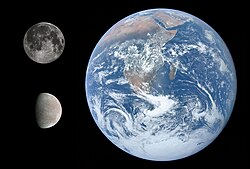
エウロパは、地球の月の約0.8倍の大きさを持ち、その表面は非常に滑らかで、地質学的に若いことが特徴です。これは、絶えず表面が更新されていることを示唆しています。
主要な事実(Key Facts)
- 地下海洋の存在: 氷の殻の下に広大な塩水の海があると考えられている。
- 潮汐加熱: 木星や他の衛星との重力相互作用により、内部で熱が発生している。
- 地質学的活性: 表面には「リネア」と呼ばれる多数の線状の亀裂が存在する。
- 希薄な大気: 酸素を含む極めて薄い大気層が確認されている。
- 生命の可能性: 水、エネルギー、有機物の3要素が揃っている可能性がある。
内部構造とエネルギー源
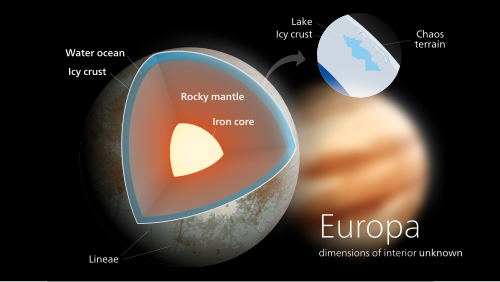
エウロパの最大の特徴は、その内部構造にあります。外側は硬い氷の殻(氷殻)で覆われていますが、その下には岩石のマントルと金属製の核が存在し、その間に液体の水からなる海洋が挟まれているというモデルが有力です。
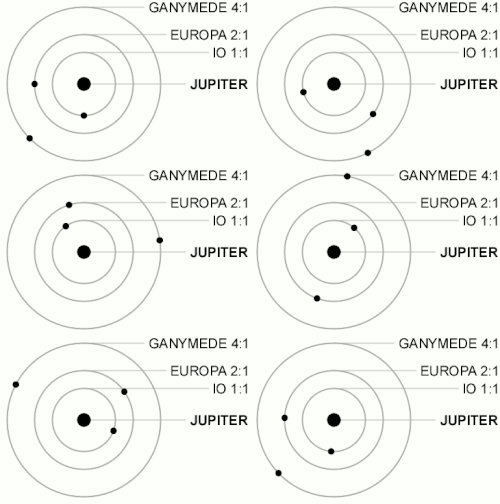
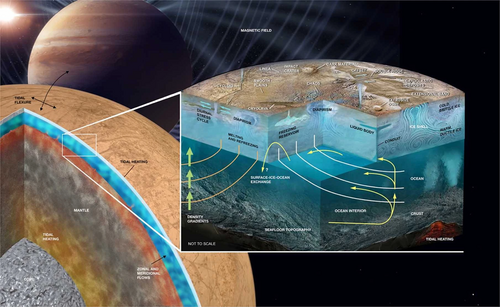
この海洋を液体状態で維持しているのが潮汐加熱(ちょうせきかねつ)です。エウロパは、隣接する衛星イオやガニメデとの間で「ラプラス共鳴」と呼ばれる軌道共鳴状態にあり、これにより軌道がわずかに楕円になります。木星の強力な重力によって衛星が引き伸ばされたり縮んだりすることで内部摩擦が生じ、それが熱源となって氷を溶かしているのです。
また、内部の放射性元素の崩壊による熱も、わずかながら寄与していると考えられています。
ダイナミックな表面環境
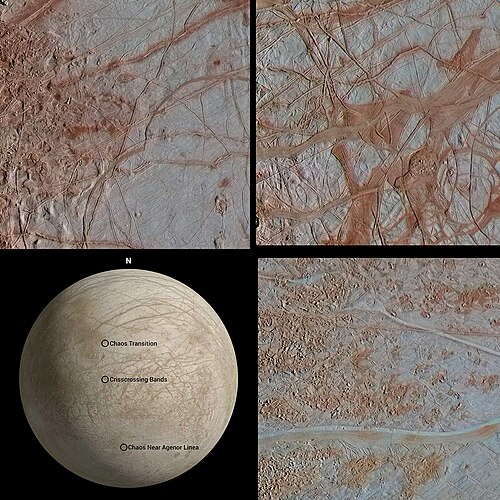
エウロパの表面は、太陽系で最も白い天体の一つであり、高いアルベド(反射率)を持っています。しかし、その白い氷の面には、暗い色の筋状の地形であるリネア(lineae)が網目状に広がっています。これらは氷殻が割れた箇所に内部の物質が染み出したものと考えられています。
![True color mosaic of Europa's numerous lineae. The region of lineae at the center of this image is the Annwn Regio.[115][116]](/images/8b/99/8b9920d0e660be50e897b1b2141224705c0717659f1eda9f473ec585aaf3dcba.png)
さらに、「カオス地形」と呼ばれる、氷のブロックが砕けて再配置されたような複雑な領域も見られます。ここでは、氷殻の下にある暖かい水や氷が上昇し、表面を突き破るような活動が起きている可能性があります。一部の説では、地球のプレートテクトニクスに似た沈み込み現象が起きているとも推測されています。
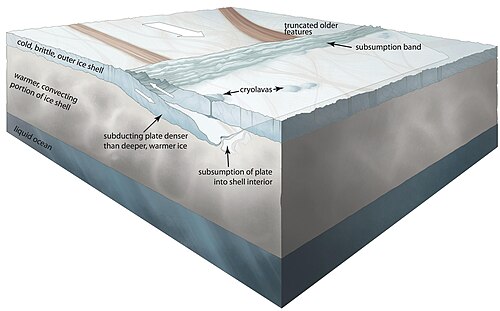
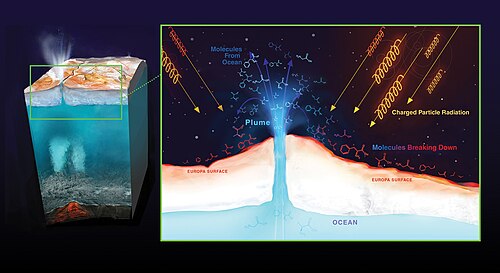
近年の観測では、表面から水蒸気が噴出するプルーム(水噴煙)の兆候が捉えられており、これが事実であれば、氷殻を掘削することなく内部海洋の成分を直接分析できる可能性があります。
![Photo composite of suspected water plumes on Europa[78]](/images/e3/26/e32611ba0a57bf4147cb9a78ede947b92c6d5e2b92d5e70d39aff2090e270beb.jpg)
大気と放射線環境
エウロパには、表面圧力が極めて低い(約0.1マイクロパスカル)希薄な大気が存在します。この大気は、木星の強力な磁場に巻き込まれた荷電粒子が氷の表面に衝突し、水分子を分解して酸素を放出することで形成されています。
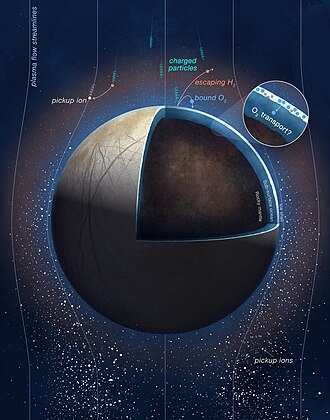
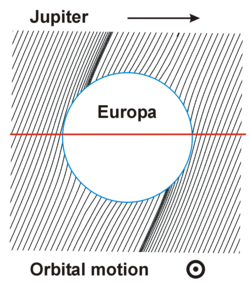
しかし、この環境は非常に過酷です。木星の強力な放射線帯にさらされており、表面の有機化合物は分解されやすく、生命にとって厳しい環境となっています。一方で、この放射線が化学反応を促進し、地下海洋へ栄養分を供給しているという側面もあります。
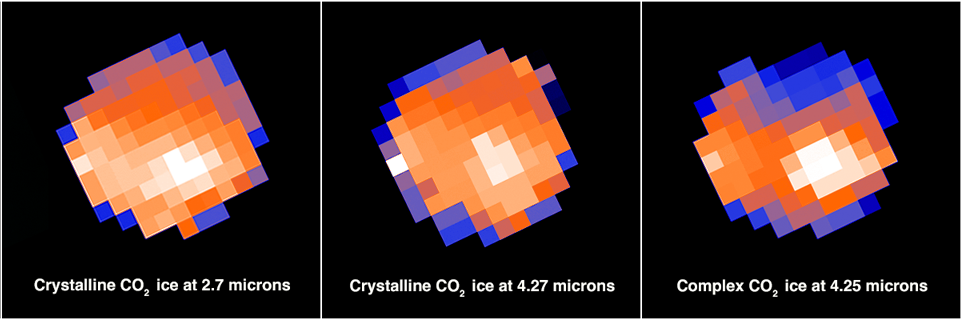
ジェイムズ・ウェッブ宇宙望遠鏡による観測では、異なる波長を用いて二酸化炭素の存在が確認されており、表面の化学組成についての理解が進んでいます。
探索の歴史と未来
これまでパイオニア、ボイジャー、ガリレオ、そして最近ではジュノーなどの探査機がエウロパを観測してきました。特にガリレオ探査機による近接撮影は、エウロパの地質学的詳細を明らかにしました。
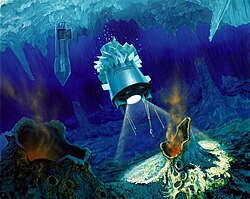
今後の計画として、NASAの「エウロパ・クリッパー」などのミッションが期待されています。これらのミッションでは、氷殻の厚さや海洋の塩分濃度、そして生命の痕跡(バイオシグネチャー)の探索が行われる予定です。将来的には、氷を溶かして潜入するクライオブット(氷穿孔ロボット)のような概念的な探査案も議論されています。
放射線がバイオシグネチャーにどのような影響を与えるかという研究も進んでおり、生命探査の精度を高める努力が続けられています。
エウロパの基本データまとめ
| 項目 | 数値・詳細 |
|---|---|
| 平均半径 | 1,560.8 km |
| 平均密度 | 3.013 g/cm³ |
| 表面重力 | 1.314 m/s² |
| 公転周期 | 約3.55日 |
| 表面温度(平均) | 約102 K (−171 °C) |
| アルベド | 0.67 ± 0.03 |
遥か未来、太陽が赤色巨星へと進化する頃には、エウロパの環境も劇的に変化することでしょう。しかし、現在の私たちにとって、この氷の月は宇宙における生命の定義を塗り替える可能性を秘めた、最もエキサイティングな目的地の一つです。

よくある質問(FAQ)
エウロパに本当に海があるのですか?
直接的に海を見たわけではありませんが、磁場観測や表面の地質学的特徴、潮汐加熱の計算から、氷の殻の下に液体の塩水海洋が存在することが科学的に強く支持されています。
なぜエウロパで生命が期待されているのですか?
生命に不可欠な「液体の水」「エネルギー(潮汐熱)」「有機化合物」の3つの要素が揃っている可能性が高いためです。特に海底火山のような熱水噴出孔があれば、太陽光がなくても生命が維持できると考えられています。
表面の「リネア」とは何ですか?
氷の表面に見られる暗い色の線状の亀裂のことです。氷殻が潮汐力で歪んで割れ、その隙間に内部の物質や塩分が上昇して凍りついたものと考えられています。
エウロパの環境で人間は生存できますか?
不可能です。極低温であることに加え、木星からの猛烈な放射線にさらされているため、強力な遮蔽なしには短時間で致命的なダメージを受けます。
今後の探査で何が明らかになりますか?
エウロパ・クリッパーなどのミッションにより、氷殻の正確な厚さ、海洋の化学組成、そして生命が存在しうる環境(居住可能性)の詳細が明らかになると期待されています。
References
- The dark-colored oval spot at the lower portion of the image is .
- Periapsis is derived from the semimajor axis (a) and eccentricity (e): a(1 − e).
- Apoapsis is derived from the semimajor axis (a) and eccentricity (e): a(1 + e).
- Surface area derived from the radius (r): 4πr 2.
- Volume derived from the radius (r): 4/3πr 3.
- Surface gravity derived from the mass (m), the (G) and the radius (r): Gm/r2.
- Escape velocity derived from the mass (m), the (G) and the radius (r): .
 .
.📸 フォトギャラリー