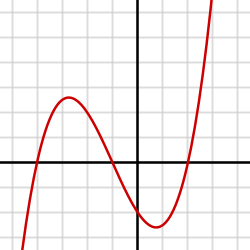
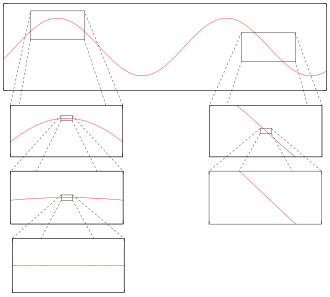
数学解析において、ある関数が微分可能(Differentiable)であるとは、その定義域内のすべての点において微分係数が存在することを指します。直感的に言えば、関数のグラフを極限まで拡大した際に、それが直線(接線)で近似できる状態を意味します。微分可能性は単なる計算手法ではなく、関数の滑らかさを定義する重要な概念です。
実数関数の場合、微分可能な点のグラフには垂直ではない接線が存在し、急激な折れ曲がりや断絶がないことが特徴です。
Key Facts
- 微分可能性と連続性:微分可能な関数は必ず連続ですが、連続であるからといって必ずしも微分可能とは限りません。
- 幾何学的特徴:微分可能な関数は、局所的に線形関数(直線)で近似でき、尖点(カスプ)や角を持ちません。
- Ck級関数:k回まで微分可能であり、かつそのk階導関数が連続である関数を指します。
- 高次元への拡張:多変数関数では、単なる偏微分の存在だけでは不十分であり、線形写像による近似可能性が定義の核心となります。
- 複素微分:複素関数における微分可能性(正則性)は、実関数よりもはるかに厳しい制約を伴います。
微分可能性の基礎概念
実数関数における定義
開集合 $U$ 上で定義された関数 $f$ が点 $a$ で微分可能であるとは、以下の極限値(微分係数)が存在することを意味します。
$$f'(a) = \lim_{h \to 0} \frac{f(a+h) - f(a)}{h}$$
この定義は、点 $(a, f(a))$ においてグラフが滑らかな接線を持つことを数学的に保証します。また、定義域の境界点においては、片側極限を用いて微分可能性を定義する「半微分可能性」という考え方が適用されます。
連続性と微分可能性の乖離
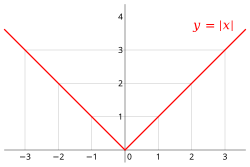
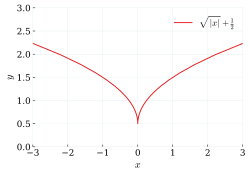
「微分可能であれば連続である」という命題は真ですが、その逆は成り立ちません。例えば、絶対値関数のようにグラフに「角」がある場合や、尖点(カスプ)を持つ関数は、その点において連続ではあっても微分は不可能です。
さらに極端な例として、あらゆる点で連続でありながら、どの点でも微分不可能という「ワイエルシュトラス関数」のような例が存在します。ステファン・バナッハの研究によれば、連続関数の空間において微分可能な関数はむしろ稀な存在であるとされています。
微分可能性の階層とクラス
関数がどれほど「滑らか」であるかを分類するため、微分可能性のクラス($C^k$級)という概念が用いられます。
- $C^0$級:単に連続である関数。
- $C^1$級:微分可能であり、かつその導関数 $f'$ が連続である関数(連続微分可能)。
- $C^k$級:$k$階までの導関数が存在し、すべてが連続である関数。
- $C^\infty$級(滑らかな関数):すべての正の整数 $n$ に対して $n$ 階導関数が存在する関数。
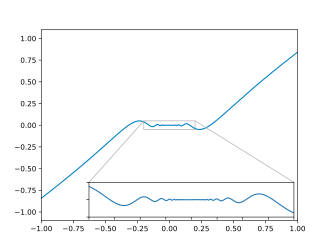
注意すべき点として、「微分可能であること」と「連続微分可能であること」は異なります。導関数が存在していても、その導関数自体が不連続である関数が存在するためです。
高次元および複素数への展開
多変数関数の微分可能性
多変数関数において、単にすべての方向の偏微分が存在するだけでは、その関数が微分可能であるとは言えません。多変数関数が点 $X_0$ で微分可能であるためには、その点において関数を線形写像(ヤコビ行列)で局所的に近似できる必要があります。
複素解析における正則性
複素関数 $f: \mathbb{C} \to \mathbb{C}$ の微分可能性は、実関数と同様の形式で定義されますが、その条件は極めて厳格です。複素平面上のあらゆる方向から近づいたときに極限値が一致しなければならないためです。ある近傍で複素微分可能な関数は正則(Holomorphic)と呼ばれ、同時に解析的(Analytic)であるという強力な性質を持ちます。
多様体上の微分可能性
微分可能多様体 $M$ 上の関数については、点 $p$ の周囲に定義された座標近傍(チャート)を用いて、その座標系における微分可能性によって定義されます。
まとめ:微分可能性の特性比較
| 対象 | 微分可能性の条件 | 幾何学的意味 | 連続性との関係 |
|---|---|---|---|
| 一変数実関数 | 微分係数の極限が存在 | 滑らかな接線の存在 | 微分可能 $\implies$ 連続 |
| 多変数実関数 | 線形写像による局所近似 | 接平面による近似 | 偏微分存在 $\not\implies$ 微分可能 |
| 複素関数 | 全方向で一致する複素極限 | 正則性(非常に強い滑らかさ) | 正則 $\implies$ 解析的 |
Frequently Asked Questions
連続関数なら必ず微分可能ですか?
いいえ、そうではありません。例えば絶対値関数のように、グラフに尖った点(角)がある場合、その点では連続ですが微分は不可能です。また、至る所連続でありながら至る所微分不可能な関数(ワイエルシュトラス関数など)も存在します。
「微分可能」と「連続微分可能」の違いは何ですか?
「微分可能」は単に各点に微分係数が存在することを指します。一方、「連続微分可能($C^1$級)」は、得られた導関数 $f'(x)$ 自体が連続関数であることを意味します。導関数が存在しても、それが不連続になるケースがあるため、この二つは区別されます。
多変数関数で偏微分ができれば微分可能と言えますか?
いいえ、言えません。すべての方向の偏微分や方向微分が存在していても、関数がその点で線形近似できない(=微分可能ではない)場合があります。多変数関数の微分可能性には、より強い条件である線形写像による近似可能性が必要です。
複素微分可能性が実関数の微分より厳しい理由は?
実関数の場合は左右の2方向からのみ検討すれば十分ですが、複素関数の場合は複素平面上のあらゆる方向(360度全方向)から近づいたときに、すべて同じ極限値に収束しなければならないためです。この制約により、正則関数は非常に強い数学的性質を持つことになります。
References
- For , is the 1-dimensional linear scalar function , where is the derivative of at . This linear function represents the tangent line to at . For and , is the 2-dimensional linear scalar function where and are partial derivatives of at . This linear function represents the tangent plane to at . All that mean is that a function is said to be differentiable at a point of its domain if the function is (at least approximately) flat near the point, i.e., the function can be (at least approximately) expressed as a linear map.
- Each partial derivative is continuous at this point over the domain of the function, not just continuous along a certain direction.
- For a two-dimensional scalar function, the proof is found in "Theorem 8, Appendix F "Proofs of Theorems", Calculus, 8th, James Stewart, Cengage learning, 2015", and this proof seems to be extendable to higher dimensional scalar functions.
- Any complex number can be obtained by a linear combination of the standard basis of with real scalars and , meaning that the set of complex numbers can be seen as a 2-dimensional real . With a given basis, a complex number can also be expressed as a tuple , so the complex numbers can be also seen as the 2-dimensional real vector space , the of two real spaces, with the basis of .
 ,
,  is the 1-dimensional linear scalar function
  , where
  is the derivative of
  at
at  . This linear function represents the tangent line to
  and
and  ,
,  where
where  are partial derivatives of
  can be obtained by a linear combination of the standard basis of
  with real scalars
  and
and  , meaning that the set of complex numbers can be seen as a 2-dimensional real .
With a given basis, a complex number can also be expressed as a tuple
, meaning that the set of complex numbers can be seen as a 2-dimensional real .
With a given basis, a complex number can also be expressed as a tuple  , so the complex numbers can be also seen as the 2-dimensional real vector space
  , the of two real spaces, with the basis of
  .
.📸 フォトギャラリー