古代の近東地方において、現代の署名やスタンプのような役割を果たしていたのが円筒印章(シリンダーシール)です。これは小さな円筒形の石などに文字や図像が彫り込まれた道具で、濡れた粘土などの表面に転がすことで、連続した模様や情報を転写することができました。紀元前3500年頃、メソポタミア南部のウルクや、後のプロト・エラム期におけるイラン南西部のスサなどで誕生したと考えられています。
この道具の登場は、ハラフ文化などで見られたスタンプ印章の発展に続き、粘土板に刻まれる楔形文字(くさびがたもじ)の進化とも密接に関わっています。
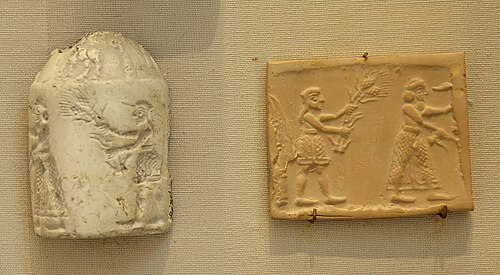
Key Facts
- 正体: 転がして模様を付ける小型の円筒形印章。
- 起源: 紀元前3500年頃の近東(ウルクやスサなど)。
- 主な用途: 行政上の署名、所有権の証明、ブランド表示、お守り。
- 素材: ヘマタイト、ラピスラズリ、カーネリアンなどの硬石やガラス、陶器。
- 特徴: 中心に穴が開いており、ネックレスのように身に着けて携帯した。
円筒印章の構造と素材
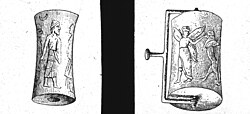
円筒印章の多くは、直径2〜3cmほどの小さな円筒形をしています。素材には、ヘマタイト、オブシディアン(黒曜石)、ステアタイト、アメジスト、ラピスラズリ、カーネリアンといった多様な硬石や宝石が用いられました。また、エジプトのファイアンスのようなガラス質や陶器で作られたものも存在します。
メソポタミアの沖積平野には彫刻に適した良質な石が少なかったため、大型の印章に使用される石材の多くはイランなどから輸入されたと推測されています。また、ほとんどの印章には中心を貫通する穴が開いており、日常的にネックレスとして身に着けていたと考えられています。
![Cylinder seal of First Dynasty of Ur Queen Puabi, found in her tomb, dated circa 2600 BC, with modern impression. Inscription: 𒅤𒀜 𒎏 - Pu3-abi(AD) Nin - Queen Pu-abi.[1][2][3]](/images/1f/48/1f48c0caf0c23227fd552eb2207276fe5824121628b3b46a521b4b68d84756e9.jpg)
多岐にわたる実用的・精神的役割
円筒印章は単なる道具ではなく、社会的な機能と個人的な意味の両方を併せ持っていました。行政面では、文書への署名や商品のブランド表示、封印による改ざん防止といった重要な管理ツールとして機能しました。また、後世には複数の粘土文書を公証するために利用されることもありました。
一方で、装飾品としての価値や、魔除けのお守り(アミュレット)としての側面もありました。そのため、金や銀、貴石と共に、名誉ある副葬品として墓に納められることも多くありました。
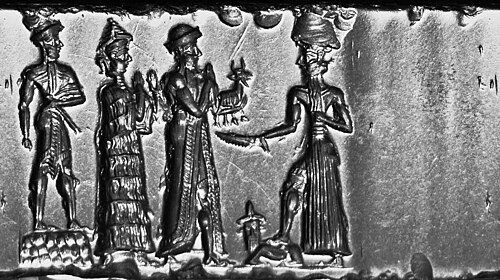
転写される対象は非常に幅広く、以下のようなものが挙げられます。
- 粘土板や封筒
- 貯蔵瓶や商品の梱包材(ベール)
- レンガやドア
- 布地(インクを用いたローラースタンプ形式の場合)
- お守りなどの工芸品
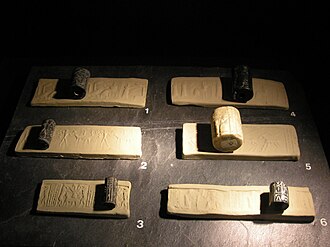
図像に込められた社会的な意味
印章に刻まれた図柄は、単なる装飾ではなく、当時の社会的な価値観や宗教観を反映したものでした。例えば、ペルシャのダリウス1世を描いた有名な印章では、彼が弓を射てライオンを退治する様子が描かれており、その上部にはゾロアスター教の神アフラ・マズダを象徴するファラヴァハルが配置されています。このように、図像と楔形文字を組み合わせることで、権威や信仰を視覚的に表現していました。
また、地域によっても特徴が異なります。キプロスの印章には豊穣の象徴である花を持つ裸婦が描かれたものがあり、新アッシリア時代には翼を持つ守護神による儀式の様子が刻まれたものが見られます。
![This cylinder seal from Cyprus shows two nude female figures. Each holds a flower, a symbol of fertility.[11] The Walters Art Museum.](/images/40/5e/405e66235eeb199bbe5139aa4a11f0f6f0f5d1c7b467a40c467bbe3e3429122e.jpg)
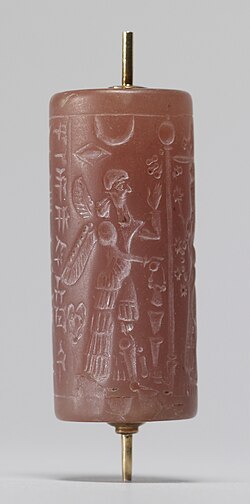
世界各地の印章文化
円筒印章の文化はメソポタミアに留まらず、アッカド、アッシリア、ヒッタイト、カッシート、ミタンニ、エジプト、シリアなど、多くの古代文明に広がりました。それぞれの文化圏で、独自の図像や形式が発展しました。
興味深いことに、メソポタミアとは全く異なる系統で、メソアメリカ(現在のメキシコ・タバスコ州)のオルメカ文化圏でも、紀元前650年頃のサン・アンドレス陶製円筒印章が見つかっています。こちらは凹凸を利用して粘土に押し付けるのではなく、盛り上がった部分にインクを塗り、布などに転写する「ローラースタンプ」形式であった点が特徴です。

まとめ:円筒印章の概要
| 項目 | 詳細 |
|---|---|
| 主な機能 | 署名、所有権証明、行政管理、魔除け、装飾 |
| 主要素材 | ラピスラズリ、ヘマタイト、カーネリアン、ガラス、陶器 |
| 転写方法 | 濡れた粘土に転がす(凹彫り)、またはインクで転写(凸彫り) |
| 主な分布 | メソポタミア、イラン、エジプト、シリア、メソアメリカ(独立発展) |
Frequently Asked Questions
円筒印章はどのようにして使われていたのですか?
主に濡れた粘土の表面に円筒を転がして使用しました。これにより、彫られた図柄や文字が反転して粘土に押し付けられ、連続した模様として転写されました。これにより、文書の封印や所有者の証明が行われました。
なぜ円筒形だったのでしょうか?
円筒形にすることで、限られた面積の印章から、長い帯状の連続した図柄を転写することが可能になります。これは、大きな粘土板や容器の口などを効率的に封印するのに適していました。
どのような素材で作られていましたか?
ラピスラズリやカーネリアン、ヘマタイトなどの硬い石が多く使われました。これらの石材の多くは、石が少ないメソポタミア平原へ外部(主にイランなど)から輸入されていました。また、一部ではガラスや陶器も利用されました。
メソポタミア以外でも使われていたのですか?
はい。近東の多くの文明(エジプトやヒッタイトなど)で利用されていました。また、全く別の系統ですが、メキシコのオルメカ文化圏でも、インクを用いて布などに転写する形式の円筒印章が使用されていたことが分かっています。
印章にはどのような内容が刻まれていたのですか?
所有者の名前や役職を示す楔形文字のほか、神々への祈り、王の権威を示す狩猟シーン、宗教的な儀式、あるいは豊穣を願う象徴的な図像などが刻まれていました。
References
- British Museum notice WA 121544
- (2013). The Sumerian World. Routledge. p. 622. .
- Anthropology, University of Pennsylvania Museum of Archaeology and; Hansen, Donald P.; Pittman, Holly (1998). Treasures from the Royal Tombs of Ur. UPenn Museum of Archaeology. p. 78. .
- Brown, Brian A.; Feldman, Marian H. (2013). Critical Approaches to Ancient Near Eastern Art. Walter de Gruyter. p. 304. .
- Mesopotamian cylinder seals, British Museum
- Why Cylinder Seals? Engraved Cylindrical Seal Stones of the Ancient Near East, Fourth to First Millennium B.C., by Edith Porada © 1993 College Art Association., The Art Bulletin, Vol. 75, No. 4 (Dec., 1993), pp. 563-582, JSTOR
- Why Cylinder Seals? Engraved Cylindrical Seal Stones of the Ancient Near East, Fourth to First Millennium B.C., by Edith Porada © 1993 College Art Association., The Art Bulletin, Vol. 75, No. 4 (Dec., 1993), pp. 563-582, JSTOR
- "Ancient Cylinder Seals". Johns Hopkins Archaeological Museum. Johns Hopkins University. Archived from the original on 30 June 2019. Retrieved 23 April 2023.
Throughout much of the ancient Near Eastern world, from the end of the 4th millennium B.C.E. until the 5th century B.C.E., cylinder seals were used both as administrative tools – functioning much as a signature does on an official document today, or used to mark one's property and to prevent tampering with sealed doors or containers [...].
-
(7 November 2019). "Urbanism and Its Demise in the Early Bronze II and III". The Archaeology of the Bronze Age Levant: From Urban Origins to the Demise of City-States, 3700-1000 BCE. Cambridge World Archaeology. Cambridge: Cambridge University Press. p. 92. . Retrieved 23 April 2023.
[...] cylinder-seal impressions appeared randomly on ceramic vessels, especially on pithoi manufactured in the region [...] the seal-impression is the mark of the fabricant, intended to brand the vessel [...].
- "Ancient Cylinder Seals". Johns Hopkins Archaeological Museum. Johns Hopkins University. Archived from the original on 30 June 2019. Retrieved 23 April 2023.
Throughout much of the ancient Near Eastern world, from the end of the 4th millennium B.C.E. until the 5th century B.C.E., cylinder seals were used [...] as decorative or protective amulets – often worn on a necklace or a pin.
📸 フォトギャラリー