Diego Velázquez de Cuéllar, conquistador of Cuba
← ホームへ戻る
キューバカリブ海キューバ革命フィデル・カストロハバナ

キューバ共和国の歴史と文化カリブ海の情熱と変遷

🗓 2026年8月12日

カリブ海に浮かぶ最大の島国、キューバは、複雑な歴史的背景と独自の文化が融合した魅力的な国家です。スペインの植民地時代から激動の革命期を経て、現在は社会主義体制の下で新たな経済的模索を続けています。本記事では、この国の地理的特性から政治、文化、そして現代の社会状況までを詳しく解説します。

主要な事実(Key Facts)

  • 政治体制: 共産党による一党制の社会主義国家。
  • 主要都市: 首都ハバナが最大の都市であり、政治・経済の中心地。
  • 言語・宗教: スペイン語が公用語。キリスト教が主流だが、無宗教や民間信仰も根強い。
  • 経済的特徴: 観光業やニッケルなどの資源、タバコ(葉巻)が主要産業。
  • 外交: 米国との長年にわたる経済封鎖(エンバーゴ)が大きな影響を与えている。

地理と自然環境

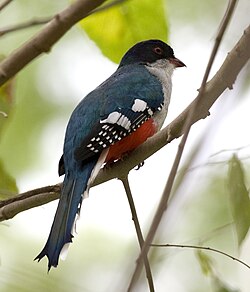
キューバはカリブ海に位置し、起伏に富んだ地形と熱帯気候が特徴です。島全体にわたる多様な生態系が存在し、特に国鳥であるキューバトカゲトカゲ(Cuban trogon)は、国旗と同じ赤・白・青の羽を持つことで知られています。
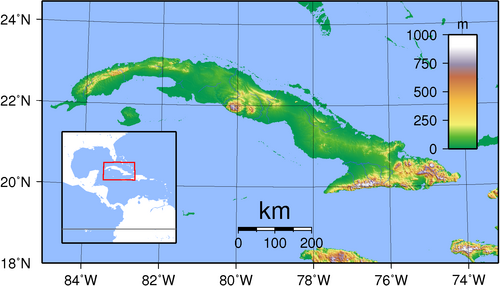
Topographic map of Cuba
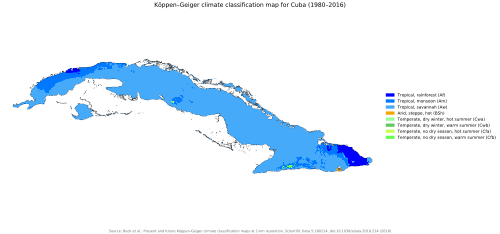
Köppen climate classification of Cuba
The Cuban trogon is the island's national bird. Its white, red and blue feathers match those of the Cuban flag.

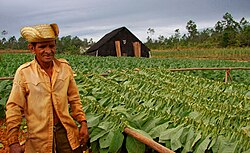
行政区画は複数の州に分かれており、それぞれの地域が独自の産業や文化を保持しています。特に西部のピナール・デル・リオ州は、高品質なタバコの産地として世界的に有名です。
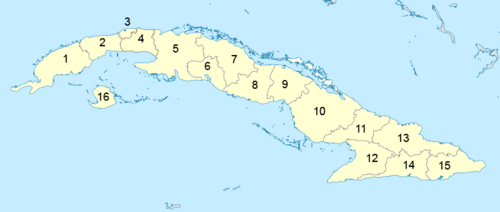
Provinces of Cuba
Tobacco fields in Viñales

激動の歴史:植民地から革命まで

スペイン統治と独立への道

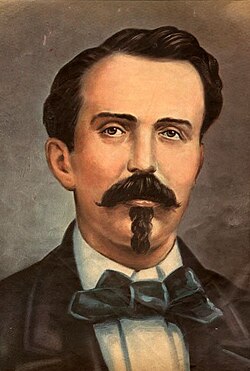
1492年以降、キューバはスペインの植民地となりました。ディエゴ・ベラスケスなどの征服者が統治を確立し、長らくスペインの拠点として機能しました。しかし、19世紀に入ると独立への機運が高まり、1868年にカルロス・マヌエル・デ・セスペデスが独立を宣言したことで、長い闘争の歴史が始まります。
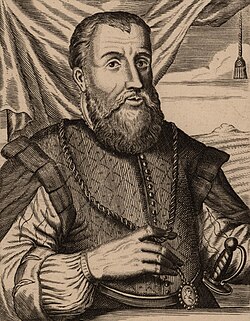
Diego Velázquez de Cuéllar, conquistador of Cuba
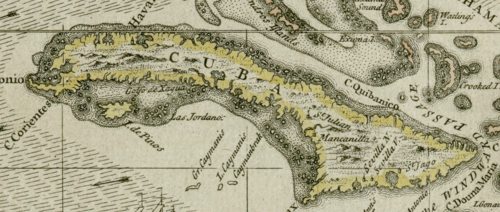
A map of Cuba c. 1680
Carlos Manuel de Céspedes is known as Father of the Homeland in Cuba, having declared its independence from Spain in 1868.

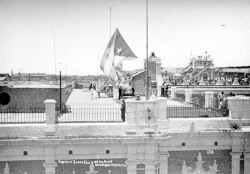
1898年の米西戦争を経て、スペインは主権を放棄しました。その後、米国の占領期間を経て1902年に共和国として独立しましたが、政治的な不安定さは続き、バティスタ政権による独裁体制へと至りました。
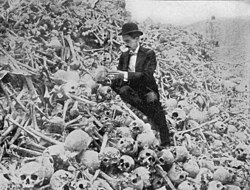
Human remains from the Cuban War of Independence after the Spanish reconcentration policy, 1898
Raising the Cuban flag on the Governor General's palace at noon on 20 May 1902.
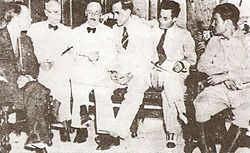
The Pentarchy of 1933. Fulgencio Batista, who controlled the armed forces, appears at far right

キューバ革命と社会主義の確立

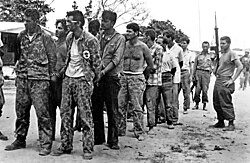
1953年から始まったフィデル・カストロとチェ・ゲバラらによる革命運動は、1959年に勝利を収めました。これにより、政府は国有化と社会改革を断行し、社会主義体制へと移行しました。この転換は、米国との関係を決定的に悪化させ、長期間にわたる経済封鎖を招くこととなりました。
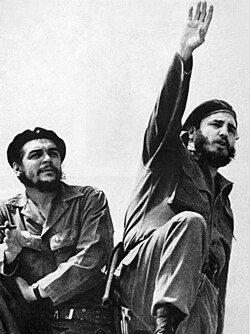
Che Guevara and Fidel Castro, photographed by Alberto Korda in 1961
Brigade 2506 prisoners, 1961

冷戦期にはソ連との密接な関係を築き、エチオピアなどの海外紛争に軍を派遣するなど、小国ながらも国際政治に強い影響力を持つ外交を展開しました。
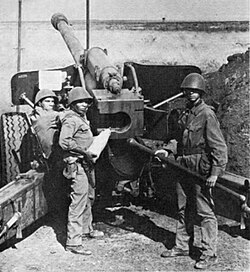
Cuban artillery crew in Ethiopia during the Ogaden War.
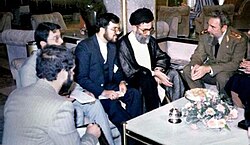
Fidel Castro and Ali Khamenei at a meeting of the Non-Aligned Movement in Zimbabwe, 3 September 1986

現代の政治と外交

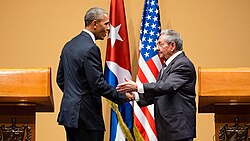
カストロ兄弟の時代を経て、現在はミゲル・ディアス=カネル大統領が指導しています。外交面では、2016年にバラク・オバマ大統領との間で関係改善の動きが見られましたが、依然として米国との緊張関係は続いています。また、ベネズエラやロシアなどの同盟国との連携を重視しています。
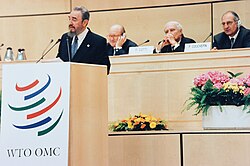
Cuban leader Fidel Castro in Geneva, Switzerland, May 1998
Raúl Castro and U.S. President Barack Obama at their joint press conference in Havana, Cuba, 21 March 2016
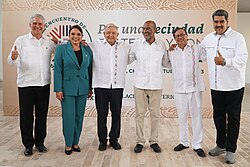
Cuban President Miguel Díaz-Canel with Venezuelan President Nicolás Maduro, Mexican President López Obrador and other leaders in Palenque, Mexico, 22 October 2023
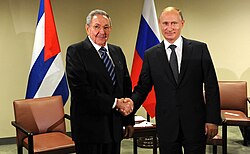
Raúl Castro with Russian President Vladimir Putin in New York City, 28 September 2015
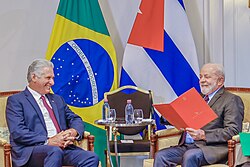
Cuban leader Miguel Díaz-Canel with Brazilian President Luiz Inácio Lula da Silva in Paris, France, 22 June 2023

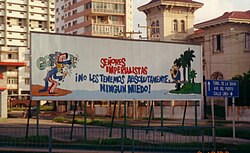
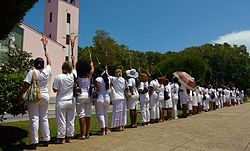
国内では、共産党本部が政治の中枢として機能しており、国家の方向性を決定しています。一方で、自由を求める「白い女性たち」のような市民活動も存在します。
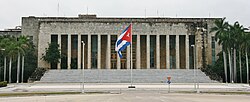
The headquarters of the Communist Party
Propaganda sign in front of the United States Interests Section in Havana
Ladies in White demonstration in Havana (April 2012)

経済と社会構造

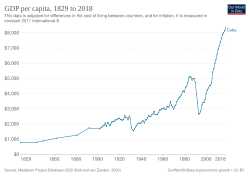
キューバ経済は、国家管理の体制から徐々に市場社会主義への移行を模索しています。近年では、特定の分野で小規模な民間企業の所有が認められるなど、経済開放が進んでいます。しかし、インフラの老朽化や物資不足は依然として課題です。

Since 1959, Cuba has regarded the U.S. presence in Guantánamo Bay as illegal.[24]
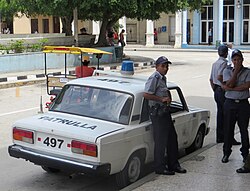
A Lada Riva police car in Holguín
Historical GDP per capita development
Cubans are now permitted to own small businesses in certain sectors.

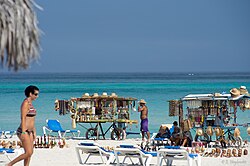
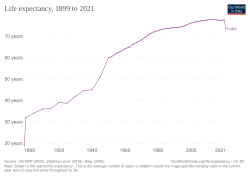
観光業は極めて重要な外貨獲得源であり、ハバナの歴史地区やバラデロのリゾート地には世界中から観光客が訪れます。また、教育と医療への公的投資は手厚く、平均寿命の向上などの成果を上げています。
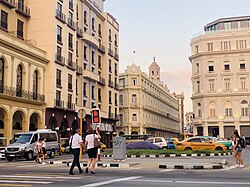
Hotel Parque Central in Havana
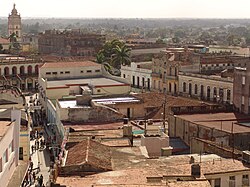
Historic Centre of Camagüey, a colonial city UNESCO World Heritage Site
Varadero resort area
Life expectancy development in Cuba

都市と生活

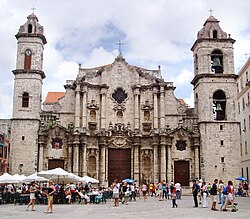
首都ハバナは、スペイン植民地時代の壮麗な建築物と、現代の生活感が混在する都市です。一方で、都市近郊には依然として貧困層が住むボイオ(藁葺き小屋)などのスラム街も存在し、社会的な格差が見られます。
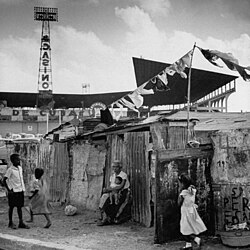
Slum (bohío) dwellings in Havana, Cuba in 1954, just outside Havana baseball stadium. In the background is advertising for a nearby casino.
Havana Cathedral, built between 1748 and 1777
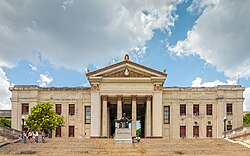
University of Havana, founded in 1728
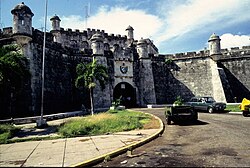
The 18th-century entrance of the Castillo del Príncipe in Havana, photo taken in 1997

デジタル化も進んでおり、公共のWi-Fiスポットの導入など、インターネットへのアクセス環境が改善されつつあります。
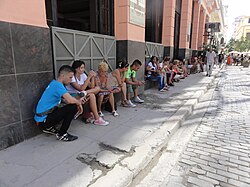
Users of a public WiFi hotspot in Havana, Cuba

文化とアイデンティティ

キューバ文化は、スペインの伝統とアフリカの要素が融合した独特のものです。音楽とダンスは国民の魂とも言え、サンティアゴ・デ・キューバなどの都市では、伝統的な音楽ハウスで情熱的な演奏を楽しむことができます。
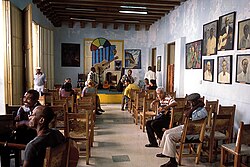
A local musical house, Casa de la Trova in Santiago de Cuba

食文化においても、牛肉をトマトベースで煮込んだ「ロパ・ビエハ」や黒豆のご飯、プランテイン(調理用バナナ)などが代表的な家庭料理として親しまれています。
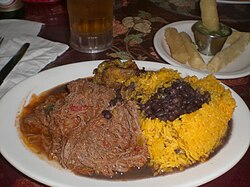
A traditional meal of ropa vieja (shredded flank steak in a tomato sauce base), black beans, yellow rice, plantains and fried yuca with beer

また、多くのキューバ人が米国へ移住しており、ニュージャージー州などのキューバ系コミュニティは、本国との文化的な架け橋となっています。
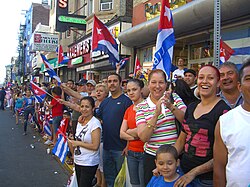
North Hudson, New Jersey, is home to a large Cuban American population.
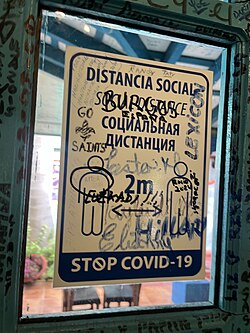
A trilingual sign encouraging social distancing in Cuba during the Covid-19 pandemic, written in Spanish, English, and Russian

キューバの基本データまとめ

キューバ共和国の概要
項目 詳細
公用語 スペイン語
政府形態 共産主義国家
人口(2022年国勢調査) 約1,109万人
面積 110,860 km²
通貨 キューバ・ペソ (CUP)
主要産業 観光、ニッケル、タバコ

Frequently Asked Questions

キューバの現在の政治体制はどうなっていますか?

キューバは共産党による一党制の社会主義国家です。現在はミゲル・ディアス=カネル大統領が国家を率いています。

米国との関係はどうして悪いのですか?

1959年の革命後、社会主義体制への移行と国有化が進んだことで米国との対立が深まり、1960年から続く経済封鎖(エンバーゴ)が導入されたためです。

キューバの経済はどのように変化していますか?

伝統的な国家管理経済から、一部のセクターで民間企業の所有を認めるなど、市場社会主義的な改革を段階的に導入しています。

キューバで有名な文化的なものは何ですか?

世界的に有名な葉巻(シガー)のほか、サルサなどの音楽とダンス、そしてスペイン植民地時代の美しい建築物が有名です。

医療や教育の状況はどうですか?

国家による強力な支援体制があり、教育と医療へのアクセスは非常に高く、特に医療水準の高さは国際的にも知られています。

References

  1. Data represents racial self-identification from Cuba's 2012 national census.
  2. The most powerful political position is , not . The first secretary controls the and the , Cuba's top decision-making bodies, making the officeholder de facto leader of Cuba.

📸 フォトギャラリー

Diego Velázquez de Cuéllar, conquistador of Cuba
A map of Cuba c. 1680
Carlos Manuel de Céspedes is known as Father of the Homeland in Cuba, having declared its independence from Spain in 1868.
Human remains from the Cuban War of Independence after the Spanish reconcentration policy, 1898
Raising the Cuban flag on the Governor General's palace at noon on 20 May 1902.
The Pentarchy of 1933. Fulgencio Batista, who controlled the armed forces, appears at far right
Slum (bohío) dwellings in Havana, Cuba in 1954, just outside Havana baseball stadium. In the background is advertising for a nearby casino.
Che Guevara and Fidel Castro, photographed by Alberto Korda in 1961
Brigade 2506 prisoners, 1961
Since 1959, Cuba has regarded the U.S. presence in Guantánamo Bay as illegal.[24]
Cuban artillery crew in Ethiopia during the Ogaden War.
Cuban leader Fidel Castro in Geneva, Switzerland, May 1998
Raúl Castro and U.S. President Barack Obama at their joint press conference in Havana, Cuba, 21 March 2016
Cuban President Miguel Díaz-Canel with Venezuelan President Nicolás Maduro, Mexican President López Obrador and other leaders in Palenque, Mexico, 22 October 2023
Topographic map of Cuba
Köppen climate classification of Cuba
The Cuban trogon is the island's national bird. Its white, red and blue feathers match those of the Cuban flag.
The headquarters of the Communist Party
Provinces of Cuba
Fidel Castro and Ali Khamenei at a meeting of the Non-Aligned Movement in Zimbabwe, 3 September 1986
Raúl Castro with Russian President Vladimir Putin in New York City, 28 September 2015
Cuban leader Miguel Díaz-Canel with Brazilian President Luiz Inácio Lula da Silva in Paris, France, 22 June 2023
Propaganda sign in front of the United States Interests Section in Havana
A Lada Riva police car in Holguín
Ladies in White demonstration in Havana (April 2012)
Historical GDP per capita development
Cubans are now permitted to own small businesses in certain sectors.
Tobacco fields in Viñales
Hotel Parque Central in Havana
Historic Centre of Camagüey, a colonial city UNESCO World Heritage Site
Varadero resort area
North Hudson, New Jersey, is home to a large Cuban American population.
A trilingual sign encouraging social distancing in Cuba during the Covid-19 pandemic, written in Spanish, English, and Russian
Havana Cathedral, built between 1748 and 1777
University of Havana, founded in 1728
Life expectancy development in Cuba
A local musical house, Casa de la Trova in Santiago de Cuba
The 18th-century entrance of the Castillo del Príncipe in Havana, photo taken in 1997
Users of a public WiFi hotspot in Havana, Cuba
A traditional meal of ropa vieja (shredded flank steak in a tomato sauce base), black beans, yellow rice, plantains and fried yuca with beer