数学の世界において、複素数(Complex Number)は実数を拡張した数体系であり、物理現象の記述や高度な計算に不可欠なツールです。最大の特徴は、2乗して「-1」になるという、実数ではありえない性質を持つ虚数単位 $i$ を導入している点にあります。かつてルネ・デカルトはこの概念を「想像上の数(imaginary number)」と呼びましたが、現代数学において複素数は実数と同様に厳密な実在性を持ち、科学技術の基盤を支えています。
複素数は一般的に $a + bi$ という形式で表されます。ここで $a$ は実部(real part)、$b$ は虚部(imaginary part)と呼ばれます。この体系を導入することで、実数の範囲では解がなかった多項式方程式(例えば $(x+1)^2 = -9$ など)に対しても、必ず解を見つけることが可能になります。
Key Facts
- 定義: 複素数は実数 $a, b$ を用いて $a + bi$ と表され、$i^2 = -1$ を満たす。
- 代数学の基本定理: 定数でない任意の複素係数多項式は、少なくとも一つの複素数解を持つ。
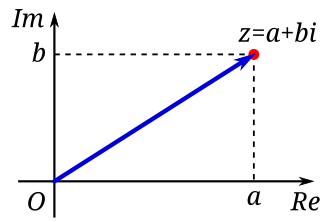
- 幾何学的表現: 複素数は「複素平面(ガウス平面)」上の点またはベクトルとして視覚化できる。
- 極形式: 絶対値 $r$ と偏角 $\phi$ を用いて、回転と拡大の概念で表現可能である。
- 広範な応用: 電気工学、量子力学、流体力学、信号処理など、現代科学の多くの分野で利用されている。
複素数の基礎と演算
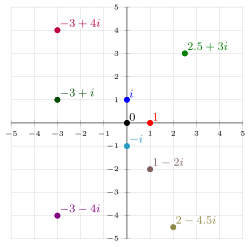
複素数は、実数軸と虚数軸からなる2次元平面上に配置して考えることができます。これを複素平面(またはアルガン図)と呼びます。実部は横軸(Re)、虚部は縦軸(Im)に対応し、一つの複素数が平面上の特定の点として定義されます。
四則演算の仕組み
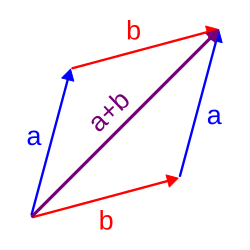
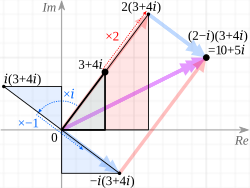
複素数の加減算は、実部同士、虚部同士をそれぞれ計算することで行われます。これは幾何学的には、ベクトルとしての平行四辺形合成と同じ意味を持ちます。
乗算においては、分配法則に従って展開し、$i^2 = -1$ というルールを適用します。例えば $(2-i)(3+4i)$ の計算では、実数部分と虚数部分を整理することで $10+5i$ という結果が得られます。
共役複素数と除算
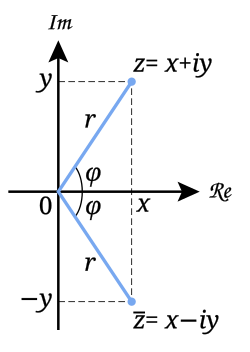
ある複素数 $z = x + yi$ に対して、虚部の符号を反転させた $\bar{z} = x - yi$ を共役複素数と呼びます。この共役複素数を掛けることで、分母を実数化(有理化に似た操作)でき、複素数同士の除算が可能になります。
極形式と高度な表現
複素数は、原点からの距離(絶対値 $r$)と、実軸正の方向からの角度(偏角 $\phi$)を用いて表現することもできます。これを極形式と呼びます。
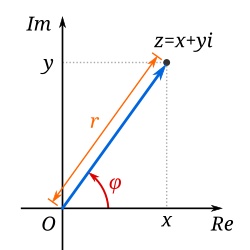
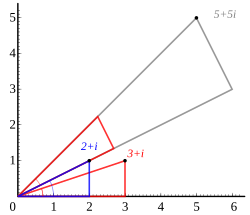
極形式を用いると、複素数の乗算は「絶対値の掛け算」と「偏角の足し算」として非常にシンプルに理解できます。これは、複素数の掛け算が平面上の回転と拡大を同時に行っていることを意味しています。
べき乗と根
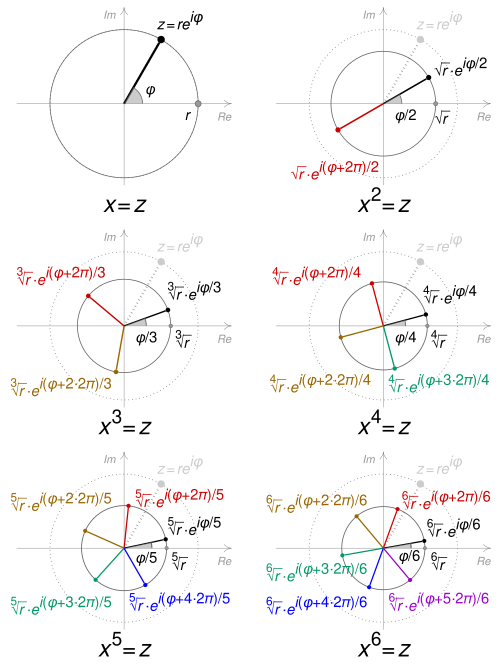
ド・モアブルの定理を用いることで、複素数の $n$ 乗を効率的に計算できます。また、ある複素数の $n$ 乗根は、複素平面上で正多角形の頂点のように等間隔に配置されるという興味深い性質を持っています。
オイラーの公式
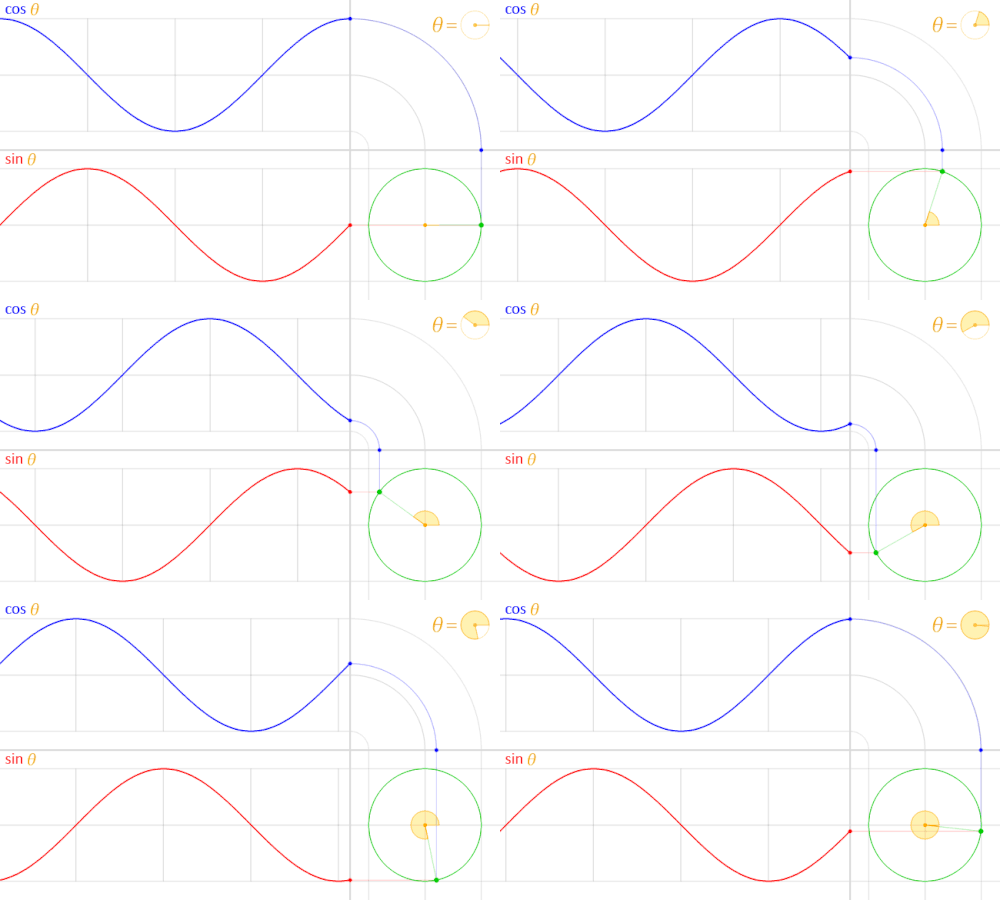
数学史上最も美しい式の一つとされるオイラーの公式 $e^{i\theta} = \cos \theta + i \sin \theta$ は、指数関数と三角関数を複素数を通じて結びつけます。これにより、円運動や波動の解析が極めて容易になります。
複素解析と関数
複素数を変数とする関数を扱うのが複素解析です。特に、微分可能な関数である正則関数(holomorphic function)は、実関数よりもはるかに強い制約と美しい性質を持っています。
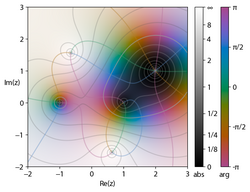
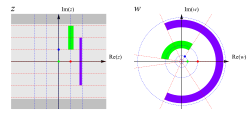
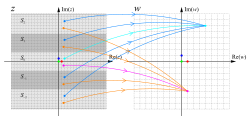
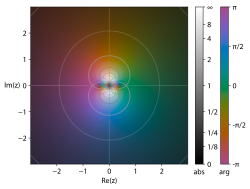
複素指数関数 $\exp(z)$ は、実数における指数関数を拡張したものであり、$2\pi i$ の周期性を持つという特徴があります。また、複素平面上の関数を色で表現する「ドメインカラーリング」などの手法を用いると、関数の零点や極(分母が0になる点)を視覚的に捉えることができます。
応用分野と幾何学
複素数は単なる理論上の道具ではなく、実世界で幅広く活用されています。
- 電気工学: 交流回路の電圧や電流は振動するため、複素数(フェーザ表示)を用いて位相と振幅を同時に管理します。
- 量子力学: 粒子の状態を表す波動関数は本質的に複素数であり、複素数なしでは量子世界を記述できません。
- 信号処理: フーリエ変換などを通じて、時間領域の信号を周波数領域に変換する際に不可欠です。
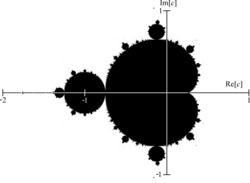
- フラクタル幾何学: マンデルブロ集合などの複雑な自己相似図形は、複素数の反復計算によって生成されます。
数体系の比較まとめ
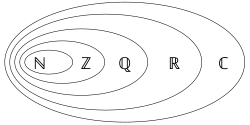
複素数は、自然数から始まる数体系の拡張の到達点の一つです。以下の表に、主要な数体系の特性をまとめます。
| 数体系 | 完備性 | 実ベクトル空間の次元 | 順序可能性 | 乗法の可換性 | 乗法の結合性 |
|---|---|---|---|---|---|
| 有理数 ($\mathbb{Q}$) | No | - | Yes | Yes | Yes |
| 実数 ($\mathbb{R}$) | Yes | 1 | Yes | Yes | Yes |
| 複素数 ($\mathbb{C}$) | Yes | 2 | No | Yes | Yes |
| 四元数 ($\mathbb{H}$) | Yes | 4 | No | No | Yes |
| 八元数 ($\mathbb{O}$) | Yes | 8 | No | No | No |
Frequently Asked Questions
なぜ「虚数」という名前がついているのですか?
17世紀の数学者ルネ・デカルトが、実数には存在しない(想像上の)数であるという意味で「imaginary」と呼んだことに由来します。しかし、数学的な意味では実数と同等に実在し、物理現象の記述に不可欠な数です。
複素数を使うと何が便利になりますか?
最大の実用性は、回転や振動を「掛け算」としてシンプルに扱える点にあります。また、実数では解けなかった方程式に解を与えるため、物理学や工学における微分方程式の解法が劇的に簡略化されます。
複素平面とは何ですか?
複素数を2次元の座標として表現した平面のことです。横軸に実部、縦軸に虚部を割り当てることで、複素数の演算をベクトルの移動や回転として視覚的に理解できるようになります。
代数学の基本定理とはどのような内容ですか?
「複素数係数の定数でない任意の多項式は、少なくとも一つの複素数解を持つ」という定理です。これにより、複素数の世界ではあらゆる多項式方程式が完全に解けることが保証されています。
複素数は物理学のどこで使われていますか?
特に量子力学では、シュレディンガー方程式に虚数単位 $i$ が組み込まれており、複素数なしでは理論が成立しません。また、電磁気学における交流回路の解析や、流体力学のポテンシャル流の計算などにも広く利用されています。
References
- : "The plane whose points are identified with the elements of is called the complex plane ... The complete geometric interpretation of complex numbers and operations on them appeared first in the work of C. Wessel (1799). The geometric representation of complex numbers, sometimes called the 'Argand diagram', came into use after the publication in 1806 and 1814 of papers by J.R. Argand, who rediscovered, largely independently, the findings of Wessel".
- In the literature the imaginary unit often precedes the radical sign, even when preceded itself by an integer.
- It has been proved that imaginary numbers necessarily appear in the cubic formula when the equation has three real, different roots by Pierre Laurent Wantzel in 1843, Vincenzo Mollame in 1890, Otto Hölder in 1891, and Adolf Kneser in 1892. Paolo Ruffini also provided an incomplete proof in 1799.——S. Confalonieri (2015)
- , p. 204 defines the modulus of a complex number but he doesn't name it:
"Dans ce qui suit, les accens, indifféremment placés, seront employés pour indiquer la grandeur absolue des quantités qu'ils affectent; ainsi, si , et étant réels, on devra entendre que ou ."
[In what follows, accent marks, wherever they're placed, will be used to indicate the absolute size of the quantities to which they're assigned; thus if , and being real, one should understand that or .]
, p. 208 defines and names the module and the direction factor of a complex number: "... pourrait être appelé le module de , et représenterait la grandeur absolue de la ligne , tandis que l'autre facteur, dont le module est l'unité, en représenterait la direction."
[... could be called the module of and would represent the absolute size of the line (Argand represented complex numbers as vectors.) whereas the other factor [namely, ], whose module is unity [1], would represent its direction.] - Gauss writes: "Quemadmodum scilicet arithmetica sublimior in quaestionibus hactenus pertractatis inter solos numeros integros reales versatur, ita theoremata circa residua biquadratica tunc tantum in summa simplicitate ac genuina venustate resplendent, quando campus arithmeticae ad quantitates imaginarias extenditur, ita ut absque restrictione ipsius obiectum constituant numeri formae a + bi, denotantibus i, pro more quantitatem imaginariam , atque a, b indefinite omnes numeros reales integros inter - et +." [Of course just as the higher arithmetic has been investigated so far in problems only among real integer numbers, so theorems regarding biquadratic residues then shine in greatest simplicity and genuine beauty, when the field of arithmetic is extended to imaginary quantities, so that, without restrictions on it, numbers of the form a + bi — i denoting by convention the imaginary quantity , and the variables a, b [denoting] all real integer numbers between and — constitute an object.]
- Gauss: "Tales numeros vocabimus numeros integros complexos, ita quidem, ut reales complexis non opponantur, sed tamquam species sub his contineri censeantur." [We will call such numbers [namely, numbers of the form a + bi ] "complex integer numbers", so that real [numbers] are regarded not as the opposite of complex [numbers] but [as] a type [of number that] is, so to speak, contained within them.]
- Gauss: "Productum numeri complexi per numerum ipsi conjunctum utriusque normam vocamus. Pro norma itaque numeri realis, ipsius quadratum habendum est." [We call a "norm" the product of a complex number [for example, a + ib ] with its conjugate [a - ib ]. Therefore the square of a real number should be regarded as its norm.]
- However for another inverse function of the complex exponential function (and not the above defined principal value), the branch cut could be taken at any other thru the origin.
 whose points are identified with the elements of
  is called the complex plane ... The complete geometric interpretation of complex numbers and operations on them appeared first in the work of C. Wessel (1799). The geometric representation of complex numbers, sometimes called the 'Argand diagram', came into use after the publication in 1806 and 1814 of papers by J.R. Argand, who rediscovered, largely independently, the findings of Wessel".
 ,
,  et
et  étant réels, on devra entendre que
  ou
ou 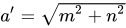 ."
."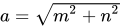 pourrait être appelé le module de
  , et représenterait la grandeur absolue de la ligne
  (Argand represented complex numbers as vectors.) whereas the other factor [namely,
 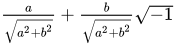 ], whose module is unity [1], would represent its direction.]
 , atque a, b indefinite omnes numeros reales integros inter -
 et +
et + and
and  — constitute an object.]
📸 フォトギャラリー