大腸がんは、結腸(colon)と直腸(rectum)に発生する悪性腫瘍の総称です。世界的に見ても罹患率が高く、2022年には約190万人が診断され、約90万人がこの病気で命を落としています。しかし、適切な検診と早期発見により、治療の選択肢は広がっており、米国での5年生存率は65%に達しています。
多くの場合、大腸がんは良性のポリープ(腺腫)から始まり、時間をかけてがんへと進行します。この過程を理解し、リスクを管理することが、予防と早期治療の鍵となります。
![Relative incidence of various histopathological types of colorectal cancer. The vast majority of colorectal cancers are adenocarcinomas.[96]](/images/fb/26/fb26a055869a8dc835660fce84721d987fd85aaeda0ee3249c2d7453b26f8e24.webp)
Key Facts
- 主な種類: 大部分が「腺がん(adenocarcinoma)」という組織型に分類されます。
- 主要な症状: 便に血が混じる、排便習慣の変化、意図しない体重減少などが挙げられます。
- リスク要因: 食生活、肥満、喫煙、飲酒、運動不足などのライフスタイルに加え、遺伝的要因が関与します。
- 検診の推奨: 一般的に45歳から75歳までの層にスクリーニングが推奨されています。
- 治療法: 手術、化学療法、放射線療法、標的療法などが組み合わせて用いられます。
大腸がんの発症メカニズムと原因
がん化のプロセスと「フィールド欠損」
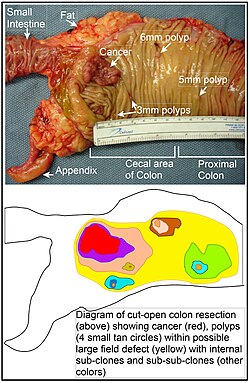
大腸がんの多くは、正常な粘膜がポリープとなり、さらにがんへと進化する「アデノーマ・カルチノーマ・シーケンス」を経て発生します。また、がんが発生した部位の周囲に、一見正常に見えても遺伝的・エピジェネティックな変異を持つ領域(フィールド欠損)が存在することがあり、これが新たな腫瘍の発生を促す土壌となります。
リスクを高める要因
発症には複数の要因が複雑に絡み合っています。特に食生活や生活習慣の影響が大きく、赤身肉や加工肉の過剰摂取、肥満、身体活動の不足、喫煙、アルコールの多用などがリスクを上昇させます。また、腸内細菌叢(マイクロバイオーム)の乱れや、潰瘍性大腸炎などの炎症性腸疾患(IBD)の既往がある場合も注意が必要です。
さらに、遺伝的な要因も無視できません。家族性大腸ポリープ症(FAP)やリンチ症候群(HNPCC)などの遺伝性疾患を持つ人は、若年層から発症するリスクが高まります。
診断と病期判定
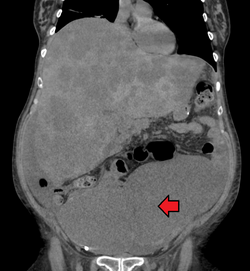
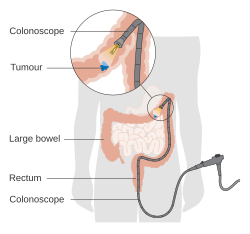
大腸がんの確定診断には、大腸内視鏡検査やS状結腸鏡検査を行い、疑わしい部位から組織を採取する生検(バイオプシー)が不可欠です。また、画像診断を用いてがんの広がりや、肝臓など他臓器への転移を確認し、ステージ(病期)を決定します。
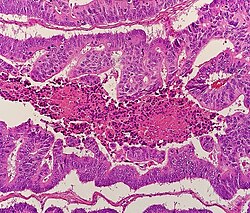
病理組織学的な検査では、がん細胞の形態や「ダーティ・ネクローシス(汚い壊死)」と呼ばれる特徴的な所見を確認し、治療方針を決定します。
治療アプローチと術後のケア
外科的治療
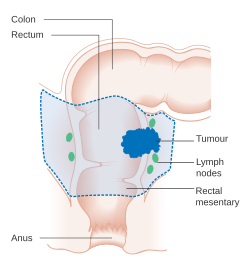
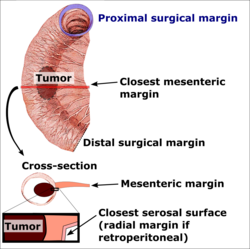
早期がんの場合は局所切除で完治が期待できますが、進行がんではがんを含む腸管の一部を切除し、健全な組織同士をつなぎ合わせる手術が行われます。切除範囲(マージン)を適切に確保することが再発防止に重要です。
薬物療法と放射線療法
手術単独では不十分な場合や、転移がある場合には、化学療法(抗がん剤)や標的療法、免疫療法が導入されます。特に直腸がんにおいては、手術前に腫瘍を縮小させる目的で放射線療法や化学放射線療法が併用されることがあります。
心身のサポートと緩和ケア
治療に伴う身体的負担だけでなく、不安や抑うつ、社会的なスティグマ(偏見)などの心理的影響への対策も重要です。心理社会的介入や緩和ケアを通じて、QOL(生活の質)の維持が図られます。
予防と検診の重要性
大腸がんは、定期的な検診によってポリープの段階で発見・切除できれば、がん化を未然に防ぐことができる数少ないがんです。45歳から75歳の方には、便潜血検査や内視鏡検査によるスクリーニングが強く推奨されています。
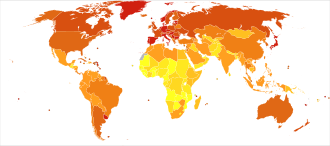
近年では、20代から40代の若年層における発症率(若年性大腸がん)の上昇が世界的な課題となっており、早期の意識向上が求められています。
大腸がんの概要まとめ
| 項目 | 詳細内容 |
|---|---|
| 主な症状 | 血便、排便習慣の変化、体重減少、疲労感 |
| 主な原因 | 食生活、肥満、喫煙、遺伝的素因、慢性炎症 |
| 診断方法 | 大腸内視鏡検査、生検、CT/MRIなどの画像診断 |
| 治療法 | 手術、化学療法、放射線療法、標的・免疫療法 |
| 予防策 | 45〜75歳の定期検診、健康的な食生活、運動 |
Frequently Asked Questions
大腸がんと大腸ポリープはどう違うのですか?
ポリープは腸の粘膜が盛り上がったもので、良性のものからがん化しやすいもの(腺腫)まであります。すべてががんではありませんが、一部のポリープが時間をかけてがんへと進行するため、発見時に切除することが予防につながります。
どのような症状が出たら病院に行くべきですか?
便に血が混じる、便が細くなる、下痢や便秘が続くなどの排便習慣の変化、または原因不明の体重減少や強い疲労感がある場合は、早めに消化器内科を受診してください。
検診はいつから始めるのが適切ですか?
一般的な推奨は45歳から75歳までですが、家族に大腸がんの既往がある場合や、炎症性腸疾患などのリスク要因がある場合は、より早い段階からの検診が推奨されます。
食事で予防することは可能ですか?
完全に防ぐことはできませんが、赤身肉や加工肉の摂取を控え、食物繊維を多く含む食事を心がけること、また肥満を避け適度な運動を習慣化することがリスク低減に寄与すると考えられています。
手術をすれば必ず完治しますか?
早期に発見し、完全に切除できれば完治の可能性は非常に高いです。しかし、進行度や転移の有無によって再発のリスクがあるため、術後の定期的なフォローアップ検査が不可欠です。
References
- "General Information About Colon Cancer". NCI. May 12, 2014. Archived from the original on July 4, 2014. Retrieved June 29, 2014.
- Bosman FT (2014). "Chapter 5.5: Colorectal Cancer". In Stewart BW, Wild CP (eds.). World Cancer Report. the International Agency for Research on Cancer, World Health Organization. pp. 392–402. .
- "Colorectal Cancer Prevention (PDQ®)". National Cancer Institute. February 27, 2014. Archived from the original on July 5, 2014. Retrieved June 29, 2014.
- Theodoratou E, Timofeeva M, Li X, et al. (August 2017). "Nature, Nurture, and Cancer Risks: Genetic and Nutritional Contributions to Cancer". Annual Review of Nutrition (Review). 37: 293–320. :10.1146/annurev-nutr-071715-051004. 6143166. 28826375.
- "Colon Cancer Treatment (PDQ®)". NCI. May 12, 2014. Archived from the original on July 5, 2014. Retrieved June 29, 2014.
- "SEER Stat Fact Sheets: Colon and Rectum Cancer". NCI. Archived from the original on June 24, 2014. Retrieved June 18, 2014.
- Bray F, Laversanne M, Sung H, et al. (April 4, 2024). "Global cancer statistics 2022: GLOBOCAN estimates of incidence and mortality worldwide for 36 cancers in 185 countries". CA: A Cancer Journal for Clinicians. 74 (3): 229–263. :10.3322/caac.21834. 0007-9235. 38572751.
- "Colorectal Cancer Signs and Symptoms | Signs of Colorectal Cancer". www.cancer.org. Retrieved February 8, 2023.
- Bibbins-Domingo K, Grossman DC, Curry SJ, et al. (June 2016). "Screening for Colorectal Cancer: US Preventive Services Task Force Recommendation Statement". JAMA. 315 (23): 2564–2575. :10.1001/jama.2016.5989. 27304597.
- Forman D, Ferlay J (2014). "Chapter 1.1: The global and regional burden of cancer". In Stewart BW, Wild CP (eds.). World Cancer Report. the International Agency for Research on Cancer, World Health Organization. pp. 16–53. .
📸 フォトギャラリー