夜空を見上げたとき、星がキラキラとまたたいて見えるのは、実は地球の大気がもたらす光学的な現象です。天文学において、この大気の乱れによって天体の像がぼやけたり歪んだりすることをシーイング(Seeing)と呼びます。地上からの観測において、シーイングは望遠鏡の性能を最大限に引き出す上での最大の障壁となります。
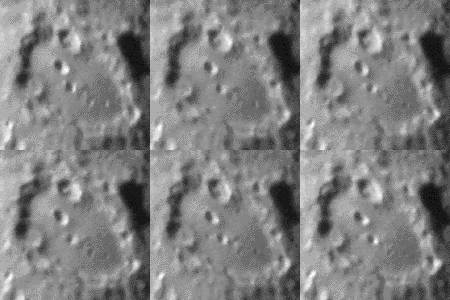
本来、望遠鏡の解像度は鏡やレンズの口径によって決まる「回折限界」に依存しますが、実際には大気中の屈折率が激しく変動しているため、光の波面が乱されます。これにより、非常に高性能な大型望遠鏡であっても、得られる画像がぼやけてしまうのです。
Key Facts
- シーイングの正体: 大気中の温度差や風による屈折率の変動が、光の経路を乱す現象。
- 解像度への影響: 大型望遠鏡であっても、大気の乱れがある場合は小さな望遠鏡と同等の解像度に制限される。
- 評価指標: シーイングディスクの半値全幅(FWHM)や、フリードパラメータ(r₀)で定量化される。
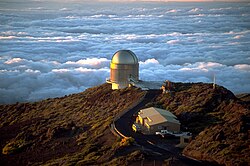
- 理想的な環境: 高標高の山頂や離島など、安定した気流が流れ込む場所が最適とされる。
- 克服技術: 適応光学(AO)やラッキーイメージングなどの手法で、大気の影響を軽減できる。
シーイングが天体像に与える具体的な影響
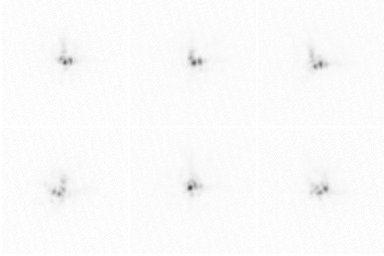
大気の乱れは、観測される天体の姿をさまざまな形で変化させます。最も顕著なのは、点光源であるはずの星が「スペックル(Speckle)」と呼ばれる小さな光の粒の集まりに分裂することです。これは非常に高速に変化するため、短時間露光では粒状に見えますが、長時間露光ではそれらが平均化され、一つのぼやけた円盤状の像になります。これをシーイングディスクと呼びます。
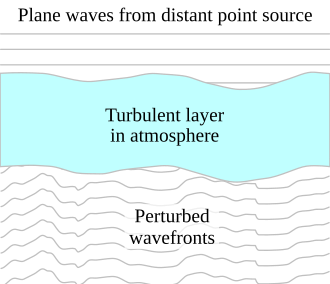
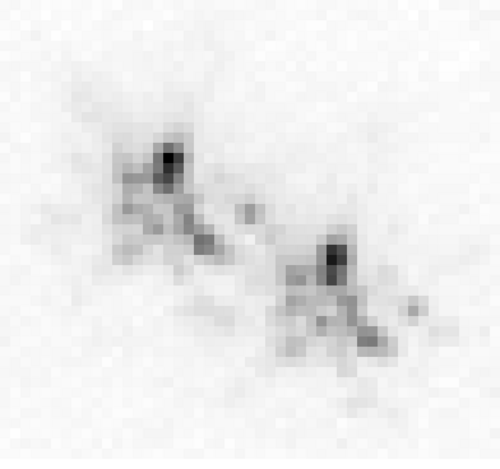
また、光の強度が変動することで、私たちは星の「またたき(シンチレーション)」として認識します。さらに、干渉計を用いた観測では干渉縞が激しく動き、精密な測定を困難にします。歴史的には、火星の表面に「運河」があるという誤解が広まった原因の一つも、このシーイングによる一時的な像の鮮明化と、観測者の記憶や先入観が結びついたためだと言われています。
シーイングを定量化する指標
天文学者は、その夜の観測条件を客観的に評価するためにいくつかのパラメータを用います。
シーイングディスクの半値全幅(FWHM)
長時間露光で得られた星の像(シーイングディスク)の、中心から強度が半分になるまでの幅をFWHMと呼び、秒角(")で表します。一般的に1.0"程度であれば良好な条件とされ、0.4"を下回ると極めて優れたシーイングであると見なされます。
フリードパラメータ(r₀)と時間定数(t₀)
フリードパラメータ(r₀)は、大気揺らぎの影響を受けない仮想的な望遠鏡の口径に相当します。例えば、r₀が20cmであれば、それ以上の口径を持つ望遠鏡を使っても、大気の影響で解像度は20cm望遠鏡と同等に制限されます。また、グリーンウッド時間定数(t₀)は、大気の乱れが変化する時間スケールを示し、適応光学システムの補正速度を決定する重要な指標となります。
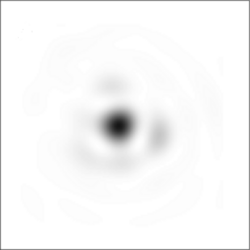
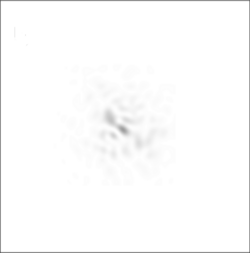
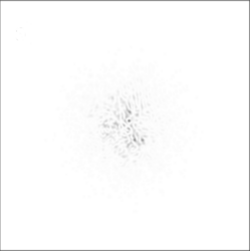
大気乱流のモデルと解析
大気の乱れを数学的に記述するために、アンドレイ・コルモゴロフの理論に基づいたコルモゴロフモデルが広く利用されています。このモデルでは、屈折率の変動が波面の位相を乱すと考え、その構造関数を用いてr₀を定義します。実際の大気はより複雑で「間欠性」を持つため、より高度なシミュレーションではガウス分布以外の変動も考慮されます。
さらに詳細な解析として、高度ごとの乱流強度を示すCN²プロファイルが作成されます。SCIDARやMASSといった手法を用いて大気層のどこに強い乱れがあるかを特定することで、最適な観測地の選定や適応光学システムの設計に役立てられます。
シーイングを克服するための技術
地上観測の限界を突破するため、さまざまなアプローチが開発されてきました。
- 適応光学(Adaptive Optics): 参照星やレーザーによる人工星を用いて大気の揺らぎをリアルタイムで測定し、可変形状鏡で波面を高速に補正する技術です。
- ラッキーイメージング(Lucky Imaging): 高速で大量の画像を撮影し、大気が偶然安定した「幸運な」瞬間だけのフレームを選別して合成する手法です。アマチュア観測者でも導入可能です。
- 宇宙望遠鏡: ハッブル宇宙望遠鏡のように、大気圏外に設置することで根本的にシーイング問題を排除します。
- 光学干渉計: 複数の望遠鏡を組み合わせることで、極めて高い角分解能を実現します。
![Astronomers can make use of an artificial star by shining a powerful laser to correct for the blurring caused by the atmosphere.[10]](/images/2b/81/2b81ff49799b06e6d624bca2aac7a8f2ec5efeccad32eb00be0bdc3bbee0045e.jpg)
シーイング条件のまとめ
| 指標 | 意味 | 良好な条件の目安 | 影響を受ける要因 |
|---|---|---|---|
| FWHM | シーイングディスクの幅 | 0.4" 〜 1.0" | 対流、風、地表の熱 |
| r₀ (フリードパラメータ) | 有効な口径サイズ | 30cm 以上 | 大気屈折率の変動 |
| t₀ (時間定数) | 揺らぎの変化速度 | (波長に依存) | 平均風速 |
| CN² プロファイル | 高度別の乱流強度 | 低強度であること | 高度による気流の安定度 |
Frequently Asked Questions
なぜ山頂に天文台を建設するのですか?
地上付近の空気は対流が激しく、シーイングが悪化しやすいためです。高標高の山頂では、雲や地表の影響を受けない安定した気流が流れ込みやすく、より鮮明な像を得られる可能性が高まります。
「またたき」と「シーイング」はどう違うのですか?
「またたき(シンチレーション)」は光の強さが変動して見える現象を指し、「シーイング」は像がぼやけたり歪んだりして解像度が低下する現象全般を指します。どちらも大気の乱流が原因です。
適応光学で完全にぼやけを消すことはできますか?
かなり軽減できますが、完全ではありません。補正できる視野角(アイソプラナティック角)に限りがあり、参照星から離れるほど補正精度が低下します。これを解決するために、複数の鏡を用いる多共役適応光学などの研究が進んでいます。
ラッキーイメージングは大型望遠鏡でも有効ですか?
いいえ、望遠鏡が大きくなるほど、口径内に存在する大気の「乱れのパッチ(r₀サイズ)」の数が増えるため、全領域で同時に安定した瞬間が得られる確率が極端に低くなります。そのため、主に小・中口径の望遠鏡で有効な手法です。
波長によってシーイングの影響は変わりますか?
はい、変わります。一般的に波長が長い(赤外線方向)ほど、大気による影響を受けにくくなり、解像度が向上し、揺らぎの変化速度(t₀)も遅くなる傾向があります。
References
- Chromey, Frederick R. (2010). To measure the sky : an introduction to observational astronomy (1. publ. ed.). Cambridge: . p. 140. .
- Tatarskiĭ, V. I. (1961). R.A. Silverman (ed.). Wave Propagation in a Turbulent Medium. University of Michigan: McGraw-Hill Books. p. 285. :1961wptm.book.....T.
- Kolmogorov, A. N. (1941). "Dissipation of energy in the locally isotropic turbulence". Comptes Rendus de l'Académie des Sciences de l'URSS. 32 (1890): 16–18. :1941DoSSR..32...16K. 51981.
- Kolmogorov, A. N. (1941). "The local structure of turbulence in incompressible viscous fluid for very large Reynold's numbers". Comptes Rendus de l'Académie des Sciences de l'URSS. 30 (1890): 301–305. :1941DoSSR..30..301K. 51980.
-
BUSCHER, D. F.; ARMSTRONG, J. T.; HUMMEL, C. A.; QUIRRENBACH, A.; MOZURKEWICH, D.; JOHNSTON, K. J.; DENISON, C. S.; COLAVITA, M. M.; SHAO, M. (February 1995). "Interferometric seeing measurements on Mt. Wilson: power spectra and outer scales". Applied Optics. 34 (6): 1081–1096. :1995ApOpt..34.1081B. :10.1364/AO.34.001081. 21037637.
- NIGHTINGALE, N. S.; BUSCHER, D. F. (July 1991). "Interferometric seeing measurements at the La Palma Observatory". . 251: 155–166. :1991MNRAS.251..155N. :10.1093/mnras/251.1.155.
- O'BYRNE, J. W. (September 1988). "Seeing measurements using a shearing interferometer". Publications of the Astronomical Society of the Pacific. 100: 1169–1177. :1988PASP..100.1169O. :10.1086/132285.
- COLAVITA, M. M.; SHAO, M.; STAELIN, D. H. (October 1987). "Atmospheric phase measurements with the Mark III stellar interferometer". Applied Optics. 26 (19): 4106–4112. :1987ApOpt..26.4106C. :10.1364/AO.26.004106. 20490196.
-
- FRIED, D. L. (1965). "Statistics of a Geometric Representation of Wavefront Distortion". . 55 (11): 1427–1435. :1965JOSA...55.1427F. :10.1364/JOSA.55.001427.
- NOLL, R. J. (March 1976). "Zernike polynomials and atmospheric turbulence". . 66 (3): 207–211. :1976JOSA...66..207N. :10.1364/JOSA.66.000207.
- The effect of temporal fluctuations in r0 on high-resolution observations, Robert N. Tubbs Proc SPIE 6272 pp 93T, 2006
-
- BATCHELOR, G. K., & TOWNSEND, A. A. 1949 (May).
- Baldwin, J. E.; Warner, P. J.; Mackay, C. D., The point spread function in Lucky Imaging and variations in seeing on short timescales, Astronomy and Astrophysics V. 480 pp 589B.
- Villanueva, Steven Jr.; Depoy, D. L.; Marshall, J.; Berdja, A.; Rheault, J. P.; Prieto, G.; Allen, R.; Carona, D. (July 2010). "MooSci: A lunar scintillometer" (PDF). In McLean, Ian S; Ramsay, Suzanne K; Takami, Hideki (eds.). Ground-based and Airborne Instrumentation for Astronomy III. Vol. 7735. p. 773547. :2010SPIE.7735E..47V. :10.1117/12.857413. 55371329.
- "A Mix of Colours and Wonder". Retrieved June 15, 2015.
📸 フォトギャラリー