プエルトリコの山間に位置していたアレシボ天文台は、数十年にわたり人類の宇宙への視界を広げ続けた象徴的な施設でした。1963年の運用開始以来、その圧倒的な集光能力によって、遠方の銀河から地球近傍の小惑星に至るまで、宇宙のあらゆるスケールの謎に挑んできました。
この施設は単なる観測装置ではなく、科学的な金字塔であると同時に、文化的なアイコンとしても世界中で知られていました。しかし、自然災害と経年劣化という過酷な現実に直面し、2020年にその歴史に幕を閉じました。
Key Facts
- 最大級の規模: 直径304.8メートルの巨大な反射鏡を備えていた。
- 多才な研究: 電波天文学、惑星レーダー、SETI(地球外知的生命体探査)など幅広い分野で貢献。
- 歴史的メッセージ: 1974年に地球の情報を込めた「アレシボ・メッセージ」を宇宙へ送信。
- 突然の終焉: 2020年12月1日、構造的な崩壊により完全に運用不能となった。
驚異的な設計と技術的構造
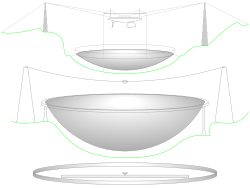
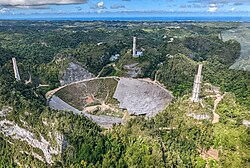
アレシボ望遠鏡の最大の特徴は、天然のカルスト地形(石灰岩の窪地)を利用して建設された点にあります。直径約305メートルの巨大な球面反射鏡を地面に固定し、その上空に受信機を吊り下げるという独創的な構造を採用していました。
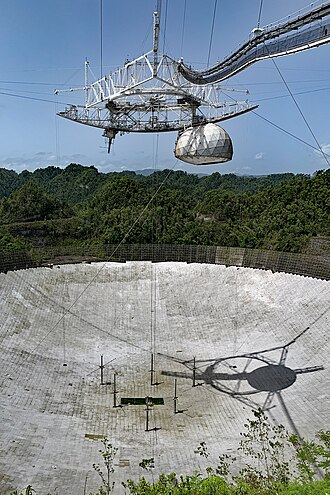
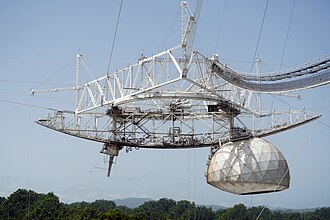
観測の精度を高めるため、焦点領域には複雑なビーム制御メカニズムが導入されていました。固定されたプラットフォームの下で方位角アームが回転し、グレゴリアン副反射鏡などを通じて電波を効率的に集約していました。また、430MHz帯のレーダー送信機などの高度な設備を備え、宇宙空間への強力な信号送信も可能にしていました。
宇宙への挑戦:主要な研究成果と活動
電波天文学とSETI
アレシボは、パルサーの周期測定や遠方銀河における生命の構成要素の検出など、天文学に革命をもたらす発見を数多く成し遂げました。特にSETI(地球外知的生命体探査)やMETI(地球外知的生命体へのメッセージ送信)プロジェクトにおける役割は大きく、人類が孤独ではないことを証明しようとする試みの中心地となりました。
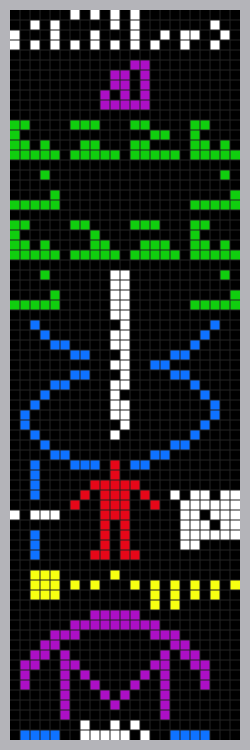
その象徴が、1974年に送信された「アレシボ・メッセージ」です。これは、人類のDNA構造や太陽系の様子、地球人の姿などをバイナリ形式で記述したもので、宇宙の知的生命体への挨拶として設計されました。
惑星防衛とレーダー観測
天体観測だけでなく、地球に接近する小惑星や彗星の追跡といった「惑星防衛」の観点からも不可欠な存在でした。強力なレーダーを用いて天体の形状や回転周期を精密に測定し、潜在的な衝突リスクの評価に貢献しました。
崩壊への道のりと最期
2017年のハリケーン・マリアによる甚大な被害を経て、天文台は復旧に努めましたが、構造的な脆弱性が露呈し始めました。2020年8月には支持ケーブルの一本が断裂し、反射鏡に大きな穴が開くという深刻な事態が発生しました。
![Map of Arecibo Observatory after November 2020 cable damage[6]](/images/e1/98/e19800c78bd15fbeb48504059a3a19e36d45079d021ef3ca7983cb798887fe07.webp)
その後、さらなるケーブルの断裂が続き、安全上の懸念から運用停止と解体計画が発表されました。しかし、その決定から間もない2020年12月1日、受信機プラットフォームが反射鏡の上に崩落し、57年にわたる運用は物理的な破壊とともに幕を閉じました。
アレシボ天文台の基本スペックまとめ
| 項目 | 詳細 |
|---|---|
| 所在地 | プエルトリコ アレシボ |
| 反射鏡直径 | 304.8 m |
| 有効集光面積 | 73,000 m² |
| 観測波長 | 3 cm (10.0 GHz) ~ 1 m (300 MHz) |
| 運用期間 | 1963年11月1日 ~ 2020年12月1日 |
| 管理組織 | セントラルフロリダ大学 (UCF) 等 |
Frequently Asked Questions
アレシボ望遠鏡はなぜ崩壊したのですか?
主な原因は、構造を支えていた支持ケーブルの相次ぐ断裂です。経年劣化に加え、ハリケーンなどの自然災害による負荷が蓄積し、最終的にプラットフォームを支えきれなくなったため崩落に至りました。
アレシボ・メッセージとは何ですか?
1974年に地球外知的生命体に向けて送信された電波メッセージです。人類の身体的特徴、DNAの構造、太陽系における地球の位置などの情報を、0と1のバイナリ形式で表現して送信しました。
崩壊後、再建される計画はありますか?
次世代のアレシボ望遠鏡に関する構想や議論はありましたが、最終的に国立科学財団(NSF)などは再建しない方針を決定しました。現在は過去のデータの保存と、その遺産の継承に焦点が当てられています。
この望遠鏡はどのような研究に利用されていましたか?
主に電波天文学(パルサーやクエーサーの観測)、惑星レーダー(小惑星の追跡)、およびSETI(地球外知的生命体の探索)という3つの大きな柱で研究が行われていました。
References
- National Park Service (October 3, 2008). "Weekly List Actions" (PDF). Archived from the original on March 29, 2013. Retrieved February 6, 2018.
- Santos, Juan Llanes (March 20, 2007). "National Register of Historic Places Registration: National Astronomy and Ionosphere Center / Arecibo Observatory" (PDF). . Archived from the original (PDF) on May 30, 2009. Retrieved October 21, 2009. (72 pages, with many historic b&w photos and 18 color photos)
- "Milestones:NAIC/Arecibo Radiotelescope, 1963". IEEE Global History Network. . Archived from the original on March 6, 2012. Retrieved July 29, 2011.
- "NSF begins planning for decommissioning of Arecibo Observatory's 305-meter telescope due to safety concerns" (Press release). National Science Foundation. March 30, 2021. News Release 20-010. Archived from the original on November 19, 2020. Retrieved October 26, 2023.
- Clery, Daniel (November 19, 2020). "Famed Arecibo telescope, on the brink of collapse, will be dismantled". Science. Archived from the original on November 19, 2020. Retrieved November 19, 2020.
- Witze, A (November 2020). "Legendary Arecibo telescope will close forever - scientists are reeling". Nature. 587 (7835): 529–530. :2020Natur.587..529W. :10.1038/d41586-020-03270-9. 33214727. 227078999.
- "Giant Arecibo radio telescope collapses in Puerto Rico". . . 1 December 2020. Retrieved 1 December 2020.
- Coto, Dánica (December 1, 2020). "Huge Puerto Rico radio telescope, already damaged, collapses". . Retrieved December 1, 2020 – via .
- Goldsmith, P. F.; Baker, L. A.; Davis, M. M.; Giovanelli, R. (1995). "Multi-feed Systems for the Arecibo Gregorian". Astronomical Society of the Pacific Conference Series. 75: 90–98. :1995ASPC...75...90G.
- "Telescope Description". . Archived from the original on November 20, 2020. Retrieved November 20, 2020.
📸 フォトギャラリー